The Big Number Isn't Yours: What Progressive Jackpots Really Cost You
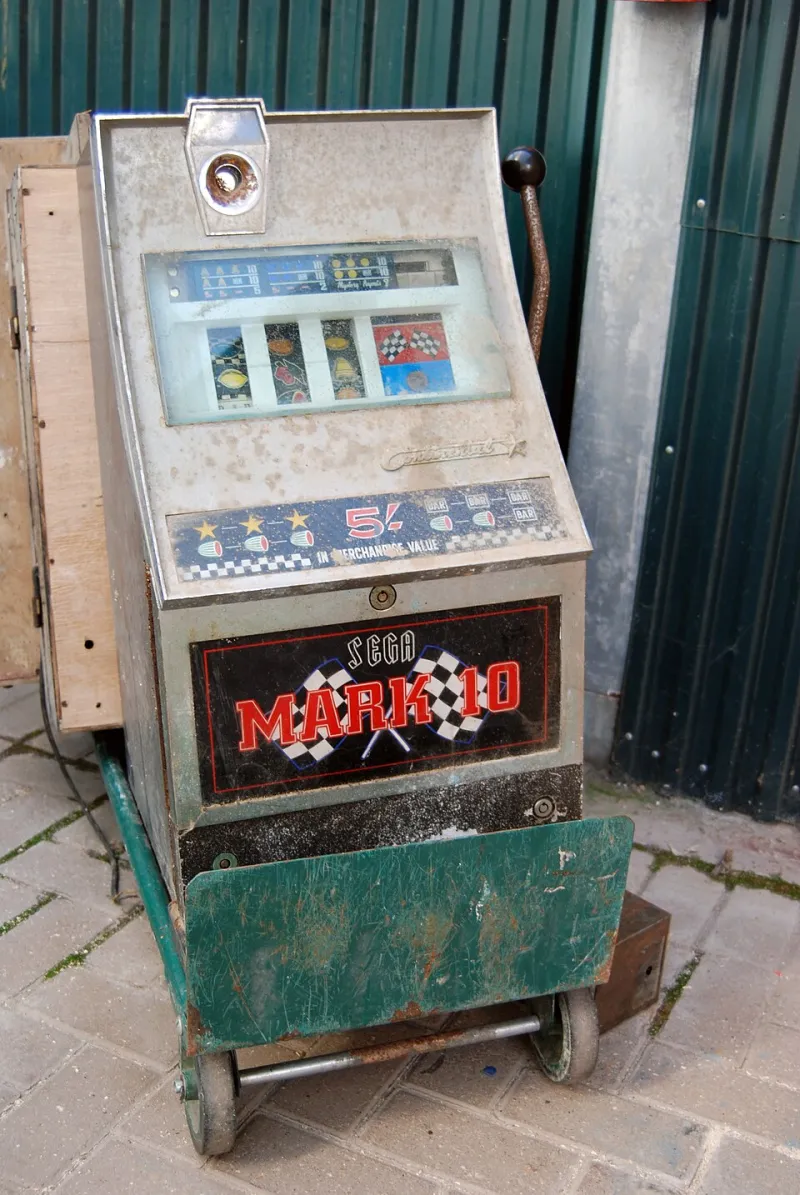
Photo: allen watkin from London, UK, CC BY-SA 2.0, via Wikimedia Commons
The number on the sign is designed to do one thing: make you look at it. It ticks up, it flashes, it sits above the reels like a promise. Seven figures. Sometimes eight. And somewhere in the back of your brain a small voice says "someone's got to win it".
True. Someone does. But the distance between that statement and "you will" is where a lot of bankrolls go to die.
What "progressive" actually means
A standard pokie has a fixed jackpot funded by its own maths — a built-in payout that's already priced into the return-to-player figure. A progressive works differently. A slice of every single bet placed on that game, across every machine and every player in the network, gets skimmed off and added to one shared pool.
The meter only goes up when people play. It only pays out when someone hits the trigger. And the operator usually seeds the pool at a starting figure after a win and lets the contributions do the rest.
Read that back and the headline number stops looking like a prize and starts looking like a group purchase. You and a few hundred thousand strangers have been putting money in a jar together. One of you gets the jar.
Why "the meter is due" is a furphy
The most common piece of progressive logic is that a big pool means a big chance. It doesn't work that way. The trigger is a random event on each spin — a jackpot that's been sitting untouched for months is not "overdue" any more than a coin is overdue to land on heads.
What does change is the expected value, marginally. The accumulated contributions sitting in the meter do represent real value that hasn't been paid out yet. But that value is spread across millions of spins and the odds of any single spin landing it are typically in the millions-to-one territory. You'd need to play an extraordinary amount, for an extraordinary length of time, to grind that theoretical edge into anything real — and the bankroll required to run that experiment would dwarf most household savings.
The volatility tax
Here's the part that rarely makes the marketing. Progressive games usually run a lower base return to the player on the regular paytable, because a chunk of every bet is being diverted into the meter. The game is also higher variance by design — long dry stretches, a paytable that feels stingy, occasional small features that keep you fed but rarely ahead.
In plain terms: you're paying a premium in exchange for a lottery ticket stapled to your session. That's not a scam, but it is a cost, and it should be a conscious one.
When chasing is a calculated choice
There is a version of this that's genuinely fine. It looks like:
- Deciding a fixed amount for the session — the same amount you'd spend on a night out — and treating the whole thing as the price of the ticket, not an investment.
- Playing the jackpot game with full awareness that the expected outcome is losing the session budget.
- Never raising stakes or spin size to "qualify" for a bigger prize tier.
- Walking away when the budget's gone, regardless of how close the meter feels.
- Not funding it out of money set aside for anything that matters.
If all five are true, you're buying entertainment with a lottery ticket attached. Plenty of people spend more on a movie and get less back.
When it's just expensive hope
You'll know it by the language. "I'm close." "It hasn't dropped in ages." "I'll just do another fifty to see." "It's got to hit tonight." That's not strategy, that's a story you're telling yourself to justify the next tap.
The tell is what happens after the budget's gone. If the answer is "spin a bit more", the session stopped being a choice a while back.
The fine print that actually matters
Before you feed a progressive, read the rules. Most networks require you to be playing at the moment the jackpot is won — a win isn't backdated. Many require a maximum bet to be eligible for the top tier, so a bigger spin can actually disqualify you if you're not careful. Contributions vary by operator and by game. Some jackpots are network-wide, some are local to one site, which changes the pool size and the odds. And check whether the win is paid as a lump sum or an annuity, because it isn't always the latter-day fantasy the ad implies.
Sizing the session
Work out the per-spin cost first, including the contribution skim. Multiply by the number of spins you realistically plan. Compare that number against what you'd happily spend on a night out. If the first figure is bigger than the second, you're not sizing a session — you're subsidising someone else's jackpot and hoping your name comes up.
The bottom line
Progressive pokies are legitimate entertainment with a genuinely exciting top end. They're also one of the least efficient ways to spend a bankroll on an hour-by-hour basis, and the big flashing number is a marketing asset, not a personal forecast. Play them for the ride, with money you've already decided you can lose — never because the sign made you feel like something was waiting for you.
Ripper Casino AU is for adults 18 and over. Set a limit before you play, not after. If gambling stops being fun, Gambling Help Online can be reached on 1800 858 858, and BetStop offers a national self-exclusion register.